As an Amazon Associate, we earn from qualifying purchases. Some links on this site are affiliate links at no extra cost to you. Our recommendations are based on thorough research and editorial judgment.

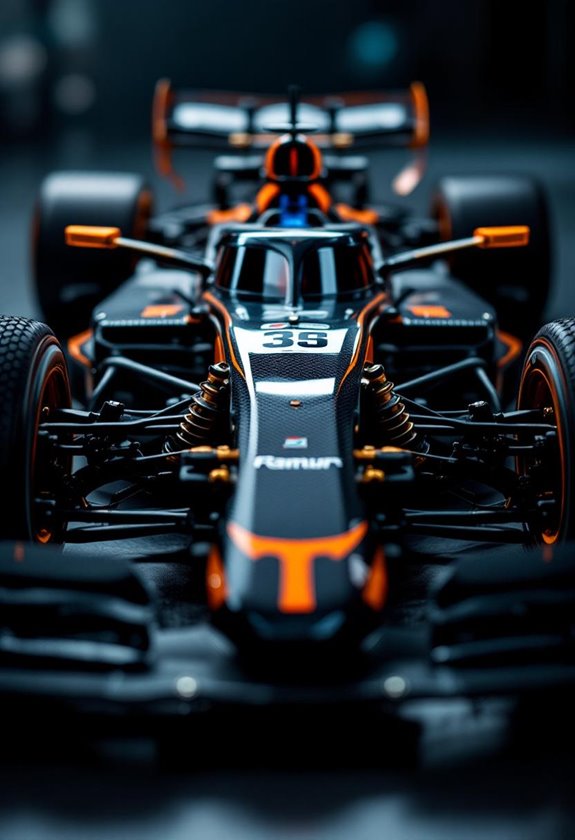
What C Rating For On Road Racing?

When it comes to on-road racing, we typically recommend a battery C rating between 30C and 60C. This range guarantees peak performance and quick acceleration. For instance, a 2000mAh battery at 40C delivers a powerful 80 amps. Higher C ratings can enhance battery lifespan, while lower ratings might slow you down during quick bursts. Selecting the right voltage paired with your C rating is essential. Stick with us, and we’ll explore how to monitor battery performance effectively.
Key Takeaways
- For casual on-road racing, a C rating between 30C and 40C is typically suitable for optimal performance.
- Competitive setups often require C ratings of 50C to 60C to meet higher power demands during races.
- A 2000mAh battery at 40C can deliver up to 80 amps, suitable for quick speed bursts in racing scenarios.
- Higher voltage batteries can enhance performance without overstressing the C rating, helping reduce voltage sag and improve acceleration.
- Monitoring battery voltage and temperature during races is crucial to prevent overheating and ensure reliable performance.
Understanding C Rating in On-Road Racing Batteries
You may be interested



When it comes to on-road racing, understanding the C rating of batteries is vital. The C rating indicates how fast a battery can discharge its energy, which affects performance. Let’s break it down:
- A higher C rating can improve battery lifespan by reducing strain during discharge cycles.
- Charge efficiency is critical; charging too fast can damage battery cells, so we should prioritize a sensible charge rate.
- Discharge cycles impact performance: too low a C rating leads to sluggishness, especially during quick acceleration.
- Temperature effects also play a role; higher current draws can elevate temperatures, risking damage. Additionally, selecting a battery type that is compatible with your RC car is essential for optimal performance and longevity.
The Importance of C Rating for Performance
Understanding the C rating of batteries is key to optimizing performance in on-road racing. The C rating impacts our vehicles in several ways, enhancing our racing efficiency.
- Acceleration and Power: Higher C rating batteries deliver more current, improving acceleration without voltage sag.
- Vehicle Control: A stable voltage helps us achieve better throttle response, leading to improved cornering.
- Longevity: Choosing an appropriate C rating prevents stress on battery components, ensuring they last longer.
- Weight Balance: We must balance C rating and battery weight to avoid compromised handling. Additionally, selecting the correct C rating can significantly influence overall high-speed performance, allowing for thrilling speeds and an exhilarating racing experience.
Typical C Rating Values in On-Road Racing

In on-road racing, selecting the right C rating for our batteries is essential to achieving best performance. Typical C rating trends suggest that we should look for:
- 30C to 40C for balanced performance in casual racing.
- 50C to 60C for competitive setups requiring extra power.
Weight plays a significant role; lighter batteries may have lower capacities yet provide a better power-to-weight ratio. A 2000mAh battery at 40C delivers 80 amps, which is critical for our quick bursts of speed. Additionally, the integration of low voltage cutoff technology can help protect our batteries from damage during intense racing sessions.
Higher C ratings above 60C are rare in standard racing and better suited for specialized applications. Ultimately, our choice should align with the ESC and motor compatibility to maximize performance without compromising battery health or longevity.
Battery Voltage and Its Effect on C Rating

Battery voltage plays an essential role in determining how effectively our lithium polymer (LiPo) batteries deliver power during on-road racing. Here’s how voltage impacts our performance:
- Higher voltage means we get more power with the same C rating, improving total current flow without stressing the battery.
- Conversely, if we’re running at our C rating limit, voltage sag can occur, reducing effective voltage and performance.
- Choosing the right voltage can help lower current demand, keeping heat generation in check and extending battery life.
In short, balancing battery voltage and C rating is vital for ideal performance. If we select higher voltage packs with moderate C ratings, we can meet peak power demands while preserving battery integrity. It’s about finding that sweet spot. Additionally, it’s crucial to consider battery life when selecting voltage options, as higher performance models may drain batteries faster than their lower-powered counterparts.
Exploring Battery Chemistry and Design
When it comes to on-road racing, battery chemistry and design are just as important as battery voltage and C ratings. The choice of lithium-ion chemistry impacts battery longevity and performance.
- NMC and NCA chemistries offer high energy density and power output, ideal for racing.
- LiFePO4 provides stability and safety, though at the cost of energy density.
Cell design is vital;
- 18650 cylindrical cells allow better cooling and space utilization, while
- pouch cells streamline connections but can limit design flexibility.
Optimizing charge rates is essential. Faster charge rates can minimize downtime, enhancing overall efficiency during races. By understanding these factors, we can better align our battery choices with our racing goals, improving both performance and reliability.
Constant C Rating Vs Burst C Rating
Understanding the difference between constant C rating and burst C rating can greatly impact on-road racing performance.
- Constant C rating signifies the maximum continuous current a battery can provide, ensuring reliable operation throughout the race. It guides our expectations for sustained runtime, essential for average driving conditions.
- In contrast, burst C rating addresses brief, intense power demands, like sudden acceleration during a race or maneuvering sharp turns.
The implications of relying solely on one rating are significant. Ignoring constant C implications may lead to overheating, while overusing burst C applications can shorten battery lifespan. Therefore, we need to strike a balance: a battery must deliver enough constant power for endurance and sufficient burst capacity for performance spikes. This balance is key to optimizing our racing experience. Additionally, factors like battery life and their relationship to performance metrics underscore the importance of careful selection when choosing components for racing.
Guidelines for Selecting C Ratings
Selecting the right C rating for our on-road racing batteries can feel overwhelming, especially with so many options available. To make an informed choice, let’s consider a few guidelines:
- Typical Range: For most racers, a C rating between 30C and 60C balances power and weight well.
- High Performance: If we’re looking at competitive racing, aiming for 80C to 100C can greatly enhance acceleration and throttle response.
- Capacity Matters: Remember, a 2000mAh battery at 40C delivers 80A, while a 4000mAh at 20C provides the same. It’s all about finding that sweet spot for both power needs and battery longevity. Additionally, understanding battery life options will help in selecting the right C rating for extended racing sessions.
Lastly, always check compatibility with our vehicle’s ESC and motor to avoid performance issues. With these insights, we’re better equipped to make a solid C rating comparison.
Recommended Products

FULL AUTOMATIC - More than 100X cheaper to operate than a full auto CO2 air rifle. Built with a full CNC aluminum receiver and handguard.

Unstoppable Power in Any Weather: This 12V 80Ah battery delivers 850 cold cranking amps (CCA) for reliable starts, whether it’s a freezing winter morning or a scorching summer afternoon.

LED Light Bars Application: YHTAUTO LED Light Bar for Pickup Truck SUV ATV UTV Golf Cart Tractor 4x4 Van Boat, you can explore additional applications such as off-road adventures, construction projects, or home workshop use
Calculating Maximum Discharge Current
Calculating the maximum discharge current for our racing batteries is essential, especially since it directly impacts performance on the track. To do this, we can use the formula:
\[ ext{Max Discharge Current (A)} = ext{Battery Capacity (Ah)} imes ext{C Rating} \]
For instance, a 5Ah battery with a 20C rating can supply 100A continuously (5 × 20 = 100A). Understanding this discharge calculation helps in maintaining battery efficiency.
It’s important to note:
- Continuous discharge current is what we need for sustained racing.
- Pulse discharge current allows for short bursts of power.
Be certain to choose a battery with a discharge rating that slightly exceeds our expected current draw to avoid damage and guarantee peak performance.
Monitoring Battery Performance During Races
When we’re racing, keeping tabs on our battery performance isn’t just useful; it’s crucial for success. Real-time voltage monitoring lets us see the state of charge and detect any voltage fluctuations under race conditions. By tracking this data, we can identify if our battery’s health is declining during the race.
- Continuous voltage readings provide quick insights.
- Monitoring temperature guarantees we avoid overheating, which can lead to failure.
- Being aware of parasitic draw helps prevent unexpected drain.
With Bluetooth-enabled tools, we can access this information instantly without interrupting our focus. Understanding how our batteries react in real-time allows us to make adjustments on the fly, optimizing performance and boosting our chances of victory.
Ensuring Compliance With Racing Regulations
Ensuring compliance with racing regulations is essential not only for upholding safety standards but also for securing our competitive edge on the track. We need to stay informed about compliance updates and adhere strictly to safety certifications.
- Licensing: Everyone at the racetrack requires a Class C license. We must demonstrate age, experience, and a law-abiding record.
- Safety Equipment: Our harnesses must have valid SFI or FIA certifications. Remember, SFI certifications expire every two years.
- Vehicle Prep: Our race cars need to meet technical standards set by the racing group. Tires, downforce devices, and modifications should comply with regulations.
Frequently Asked Questions
Can I Use Lower C Rated Batteries for High-Performance Racing?
We can’t use lower C rated batteries for high-performance racing; they won’t meet our battery specifications for racing performance. Insufficient ratings result in voltage sag and overheating, jeopardizing our speed and safety on the track.
How Does Temperature Affect Battery Performance During Races?
Temperature greatly affects battery performance during races; thermal regulation is essential. Elevated conditions can degrade battery chemistry, impacting capacity and efficiency. Conversely, cold temperatures hinder power output, highlighting the need for ideal thermal management strategies.
What Are the Risks of Using an Under-Rated C Rating?
Using an under-rated C rating risks inadequate battery quality, overheating, and performance lag. It can lead to serious failures, reduced vehicle control, and even catastrophic safety hazards. We should always prioritize matching our batteries to racing demands.
Are There Specific Brands Known for High C Rating Batteries?
When choosing high C rating batteries, we often rely on high-performance brands like Samsung and Sony. Their advanced battery technologies help guarantee reliable power delivery, optimizing our on-road racing experiences and enhancing overall performance.
How Does C Rating Impact Battery Lifespan in Racing Conditions?
In racing, higher C-ratings impact battery lifespan by stressing battery chemistry through extreme discharge rates. Continuous high current draws lead to overheating, accelerating degradation and reducing overall battery capacity over time in our competitive environments.