As an Amazon Associate, we earn from qualifying purchases. Some links on this site are affiliate links at no extra cost to you. Our recommendations are based on thorough research and editorial judgment.

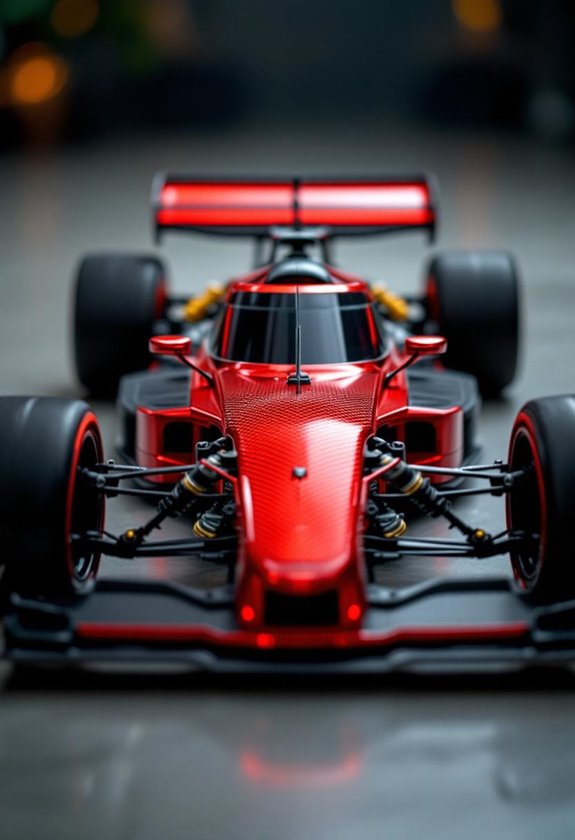
How To Start RC Racing For Beginners?

To start RC racing, we first need to pick the right vehicle. Should we go with an on-road or off-road model? On-road cars handle well on smooth surfaces, while off-road vehicles are tougher for rough terrains. Next, assembling our car is key; understanding motors and essential parts is crucial. We must also familiarize ourselves with race classes and rules, which help us compete effectively. There’s a lot more to explore, so let’s keep going!
Key Takeaways
- Choose a reliable 1/10 scale RC car from trusted brands like Traxxas or Tamiya, considering your preferred racing environment.
- Assemble your vehicle carefully, paying close attention to motor installation and battery selection for optimal performance.
- Join a local RC club or community for structured racing opportunities and to enhance your skills through networking.
- Organize your pit box with essential tools and spare parts for quick access during races, ensuring efficient pit stops.
- Understand race classes and rules, familiarizing yourself with specifications to compete effectively and comply with regulations.
Choosing the Right RC Car for Beginners
You may be interested

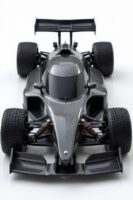
When we think about getting started in RC racing, one of the first questions that comes to mind is: how do we choose the right car? The scale selection is essential. Most beginners start with 1/10 scale cars, which balance manageability and performance. Smaller scales like 1/16 or 1/24 are great for indoor fun but may lack off-road capability.
Durability factors matter, too. Look for cars made with tough materials like aluminum and composite parts to withstand beginner mishaps. Brands like Traxxas and Tamiya offer reliable options with solid support for replacements and upgrades. Additionally, consider the durability from features such as an aluminum chassis and metal gearboxes for improved long-term performance.
Understanding On-Road vs. Off-Road Vehicles
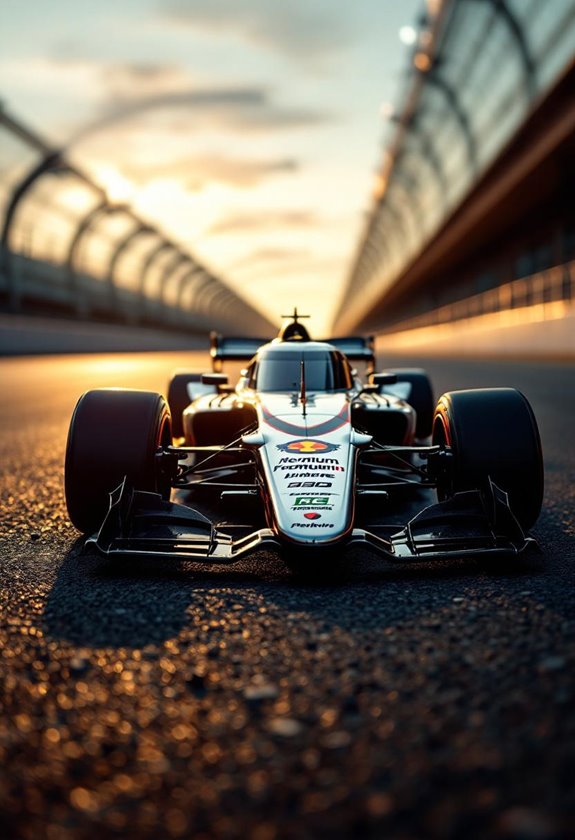
Understanding the differences between on-road and off-road RC vehicles is essential for any beginner in the world of RC racing.
- On-Road Vehicles:
- Designed for flat, smooth surfaces.
- Feature a low profile for better cornering and on-road performance.
- Vulnerable to damage from bumps and debris.
- Off-Road Vehicles:
- Built for uneven terrain like dirt or grass.
- Higher ground clearance aids in maneuvering around obstacles and guarantees off-road durability.
- Designed with tougher components, offering better protection against debris. Models such as the DEERC 9309E feature durable builds that withstand harsh conditions.
When choosing, consider where you’ll race. If you prefer speed on asphalt, go for an on-road car. For rugged trails, an off-road vehicle is your best bet. Understanding these differences sets you up for success in your RC racing journey!
Exploring All-Terrain RC Models

Exploring all-terrain RC models opens up a world of adventure for both beginners and seasoned racers. These vehicles, like buggies and monster trucks, offer unique benefits and challenges.
- Buggies: Lightweight and nimble, they’re perfect for mixed terrains, providing excellent buggy benefits like versatility and ease of handling.
- Monster Trucks: With their oversized tires and high ground clearance, they tackle rough terrains. However, be prepared for monster truck challenges like potential flipping during sharp turns.
For any terrain—dirt, mud, or rocks—selecting the right all-terrain model enhances your experience. Whether we choose a truggy for off-road speed or a rock crawler for slow, tricky terrains, understanding these options guarantees exciting adventures ahead. Additionally, considering features like all-terrain capabilities will further ensure these RC models perform well across diverse surfaces.
Assembling Your First RC Car

Assembling your first RC car can be an exciting journey that lays the foundation for countless hours of fun and racing action. We’ll start with the chassis assembly, which acts as the backbone of our vehicle. Selecting a simple kit with thorough instructions can make this process easier. Once we have our chassis in place, it’s time for motor installation. We need to carefully integrate the drive components for smooth operation. Here’s what we should have:
- Basic tools: hex drivers, screwdrivers, needle-nose pliers.
- Add-ons: CA glue, cable ties, and double-sided tape.
After securing everything, perform a quick test to verify all components function correctly. With patience and precision, our first RC car will be ready for the track! Engaging in this hands-on experience not only promotes motor skills but also enhances STEM learning concepts like energy and mechanics.
Essential Components to Know

When we plunge into the world of RC racing, it’s essential to know the key components that make up our vehicles. Understanding motor selection helps us choose between affordable brushed motors or more efficient brushless ones. Regular battery maintenance is imperative; while NiMH batteries are simpler to manage, LiPo batteries offer better performance but require careful handling. Effective tire management can greatly impact our results, so we must consider tire compounds and tread patterns. Suspension tuning, including adjusting springs and dampers, helps us navigate uneven terrain. Finally, accurate radio calibration guarantees our controls respond precisely. Each of these components plays an essential role in performance optimization, guaranteeing we get the best out of our RC racing experience. Additionally, investing in high-speed capabilities allows for thrilling racing experiences that amplify the excitement of the sport.
Practicing Basic Driving Skills
Having a solid grasp of your vehicle’s components sets the stage for skillful driving. To practice basic driving skills, we need to focus on throttle control and steering techniques:
- Throttle Control: Gradually increase throttle to see how your car responds. Avoid sudden acceleration, especially during tight corners. Maintain neutral throttle during jumps to help land smoothly. Use slight throttle modulation mid-air to avoid nose-diving or lifting.
- Steering Techniques: Slow down before corners, using brakes for the right approach angle. In mid-corner, gently apply throttle while coasting. At the exit, smoothly increase throttle to gain speed without oversteering. Additionally, understanding your car’s performance metrics can enhance your control and timing for optimal racing.
Starting With Simple Tracks
Starting with simple tracks is essential for anyone looking to build their RC racing skills effectively. By choosing a straightforward track layout, we can focus on developing our beginner skills without overwhelming ourselves. Here’s how we can achieve that:
- Surface: Use flat parking lots or dirt roads for basic control practice.
- Design: Keep track layouts short, with gentle curves and minimal jumps, allowing us to improve gradually.
- Boundaries: Clearly mark edges to prevent accidents.
Indoor options like carpet tracks offer a smooth surface and controlled environment. Stick to easy features, avoiding complex jumps or tight turns initially. This way, we can build confidence and skill steadily, making our racing experience enjoyable and productive.
Engaging With the RC Racing Community
Engaging with the RC racing community can greatly enhance our skills and enjoyment of the hobby. Joining local clubs opens doors to structured racing events and social connections. For example, the Radio Controlled Car Club of Spokane hosts regular races that are perfect for beginners and seasoned racers alike.
Participating in community events helps us practice and improve while networking with others.
- Clubs promote inclusivity, welcoming all ages and skill levels.
- National organizations like ROAR offer pathways for competitive racing and governance.
Finding Local Racing Tracks
Additionally, we should look for community track access in local parks, like the St. Louis Dirt Burners track in Greentree Park. Before heading out, let’s check the park hours and any fees associated with access. We can also tap into local hobby shops or clubs for insights and recommendations, ensuring we find the perfect spot to hone our skills and enjoy the excitement of RC racing.
Preparing for Your First Race
Now that we’ve pinpointed some great local racing tracks, it’s time to get ready for our first race. Let’s focus on vehicle preparation and pit organization to set us up for success.
Vehicle Preparation:
- Choose tires suited for track conditions and keep a second set handy for quick changes.
- Double-check motor type—brushed or brushless—to guarantee speed and control match racing demands.
- Inspect wiring, battery condition, and all adjustments for peak handling.
Pit Organization:
- Assemble a pit box with essential tools like nut drivers and spare parts.
- Organize different tire compounds for adapting to changing track conditions.
Understanding Race Classes and Rules
Understanding the different race classes and their accompanying rules is essential for anyone looking to compete in RC racing. We have several race categories designed for various skill levels:
- Rookie Class: Perfect for beginners with simpler cars.
- Sportsman Class: For those who have grasped the basics, yet still no win limits.
- Intermediate Class: Requires better lap times, ideal for advancing racers.
- Expert Class: Fastest drivers compete here.
Next, consider vehicle specifications.
- Stock Classes: Focus on unmodified motors for fairness.
- Modified Classes: For racers wanting upgrades.
- Off-Road and On-Road Classes: Different setups and specifications exist.
Developing Effective Racing Strategies
Developing effective racing strategies is essential for anyone serious about RC racing. Here’s how we can sharpen our approach:
- Track Analysis: Observing terrain challenges enables us to anticipate tight corners and jumps, improving our lap consistency.
- Racing Lines: Selecting ideal lines through corners balances speed and distance. We should experiment with entry and exit points to maximize traction.
- Overtaking Strategies: Identifying safe passing zones, especially during opponents’ slower exits, increases our chances of success.
- Tire Management: Regularly monitor tire wear; the right compound for the surface can enhance performance dramatically.
- Mental Preparation: Using visualization techniques can help us stay focused and manage stress during races.
With these strategies, we can maximize our racing effectiveness and enjoy the thrill of the competition!
Navigating Qualifying Rounds
When we immerse ourselves in the world of RC racing, steering through qualifying rounds can set the tone for our entire day at the track. Typically, we face 3 to 5 qualifying rounds, each using different qualifying formats.
- Round-by-Round Scoring: Here, only our best results count, with lower points reflecting better positions.
- Fastest Time Qualifier (FTQ): This format ranks us by our fastest single lap or best consecutive laps.
During each run, we race solo or in similar-seeded groups, focusing on clean laps. Following the qualifying rounds, officials display our positions, which directly affect our starting grid for the finals. Remember, our qualifying performance notably impacts race strategies and potential advancement to top finals.
Tips for Optimizing Race Day Performance
After maneuvering through the qualifying rounds, we’re now stepping into one of the most pivotal parts of the race day: maximizing our performance on the track. Here are some tips:
- Tire Selection: Use the right tire compound. Stiffer tires suit cooler tracks, while softer ones excel on high-traction surfaces. Always have a second set of pre-mounted tires ready.
- Car Setup Checks: Inspect differential and shock components. Small adjustments can make a big difference, especially during warm-up laps.
- Pit Essentials: Keep tools and spare parts organized. Quick access reduces downtime.
- Driving Strategy: Analyze the track. Identify the ideal race line.
- Mental Focus: Practice visualization and stress management techniques to stay sharp.
Frequently Asked Questions
What Tools Do I Need for Assembling an RC Car?
To assemble an RC car, we’ll need essential equipment like screwdrivers, pliers, cutters, and wrenches. A versatile toolset guarantees we can tackle various assembly tasks efficiently and enjoyably while preventing damage to components.
How Do I Choose the Right Battery for My RC Car?
As we envision our RC car zipping along, we must consider the battery types and voltage ratings that best fit our needs. A balanced choice, like NiMH for ease or LiPo for performance, can elevate our experience.
Can I Upgrade Parts on an RTR Model Later?
Yes, we can upgrade parts on our RTR models later. The upgrade options enhance performance while keeping RTR advantages intact, as long as we adhere to warranty terms and maintain original components during modifications.
What Maintenance Should I Perform on My RC Car?
We should establish a thorough cleaning routine after every run, focusing on tire care and debris removal. Regularly inspecting components guarantees our RC car stays in peak condition, enhancing performance and prolonging its lifespan.
How Do Weather Conditions Affect RC Racing Performance?
Weather conditions considerably impact our RC racing performance. We must adapt tire selection based on track conditions, ensuring ideal grip and handling. Awareness of temperature and moisture helps us enhance our strategy and maintain control on the track.